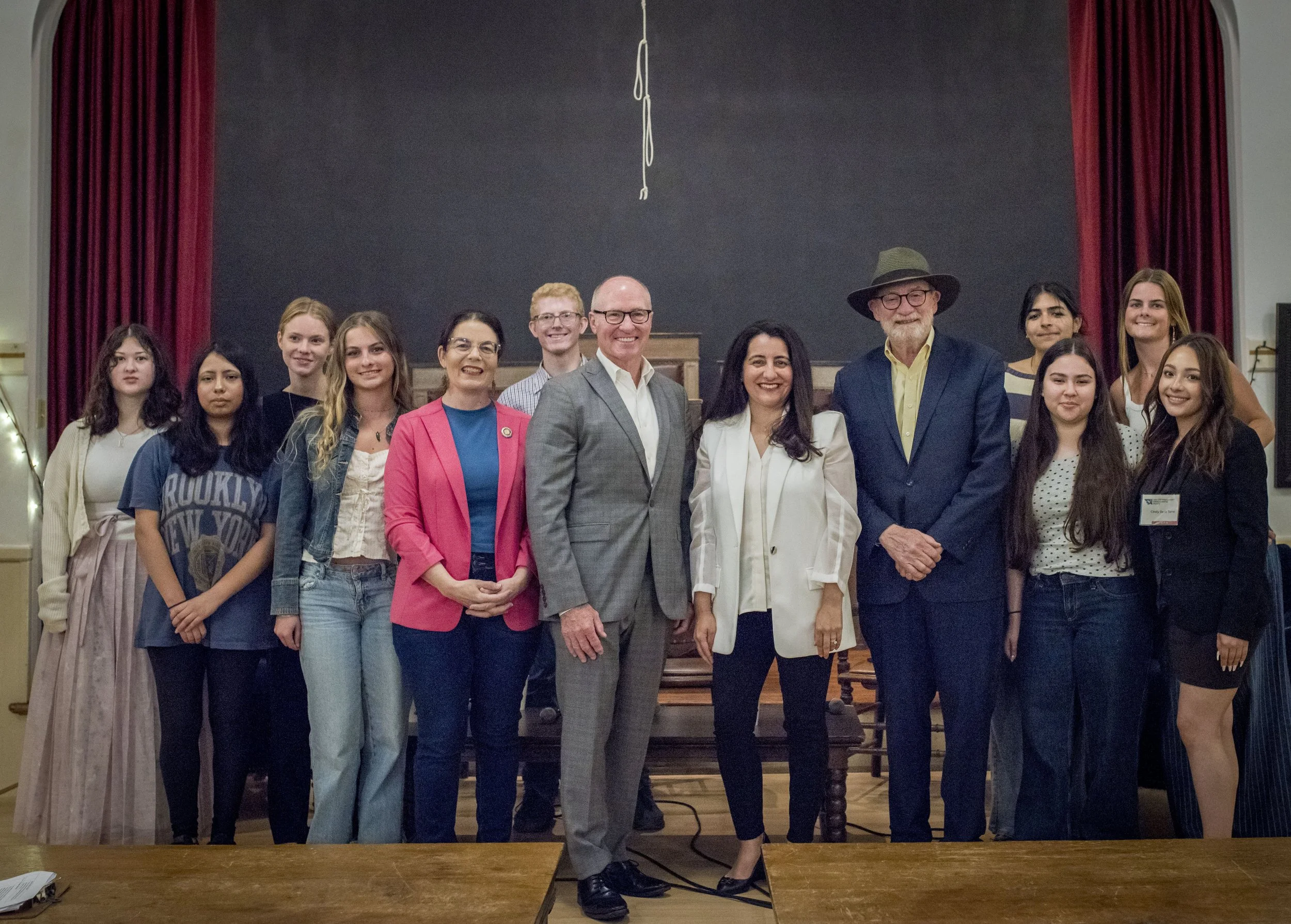
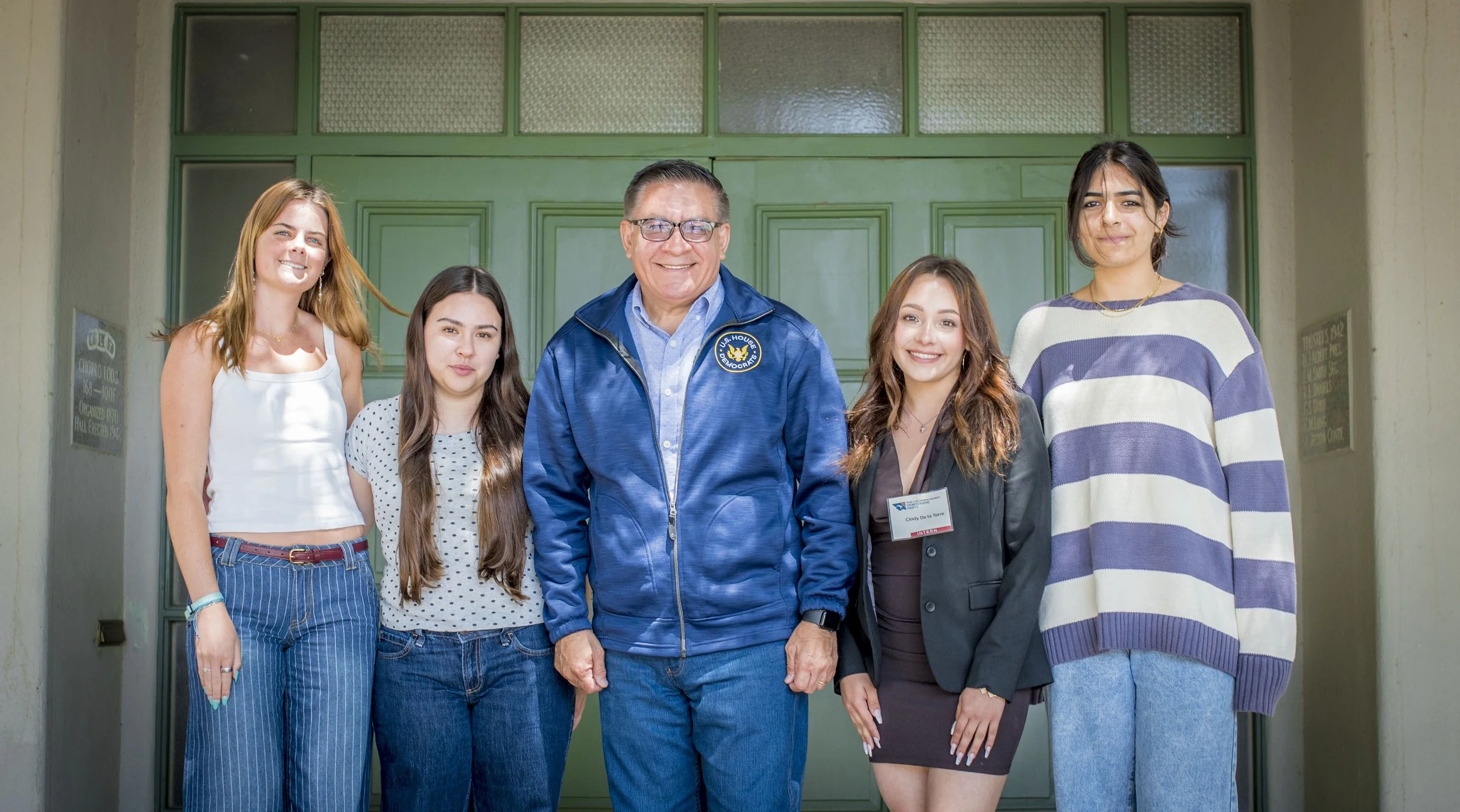
The San Luis Obispo County Democratic Party has relaunched its internship program for Cal Poly students in journalism and political science and qualified junior college students. Our goal is to create one of the most sought-after civic engagement internships in the county: a selective, professional program that provides students with hands-on experience in campaign, communications, and policy, while building the next generation of Democratic Party leaders.

Course credit is available.

Applications for Spring 2026 are complete, check back here for Summer and Fall 2026 opportunities.


During my internship, I had numerous life changing experiences, such as meeting local and state politicians, networking with prominent community members, and attending exclusive political events. The position also allowed me to work closely with other youth in building a student movement to increase equality, promote democracy, and speak directly to my elected representatives regarding the issues closest to my heart. Through it all, I was mentored by amazingly skilled organizers and trainers who provided incredible opportunities for me.

Student Internship Program - 2026!

Intern’s Experiences

Brenden Jacoby, Cal Poly Communications Major, SLOCDP Intern

Intern Spotlight - Opinion / Analysis

SLO County Supervisors Await Staff Recommendations on Ways to Distance County from ICE

By Stella Barnes 

San Luis Obispo County supervisors are expecting a set of policy recommendations from their staff by March 31 on what actions, if any, can be taken to prohibit federal immigration agents from using county-owned property.

The directive from supervisors to develop ways the county can distance itself from violent, masked immigration and Customs Enforcement (ICE) behavior came as public tension rises resulting from aggressive ICE raids in SLO County between Christmas and New Year’s Day. ICE agents were recorded snatching people off the streets and aggressively confronting protesters at County Jail.

The tension got exponentially worse during the ensuing month with the back-to-back shooting deaths of Renee Good and Alex Pretti, both American citizens, at the hands of violent Border Patrol and ICE agents in Minneapolis.

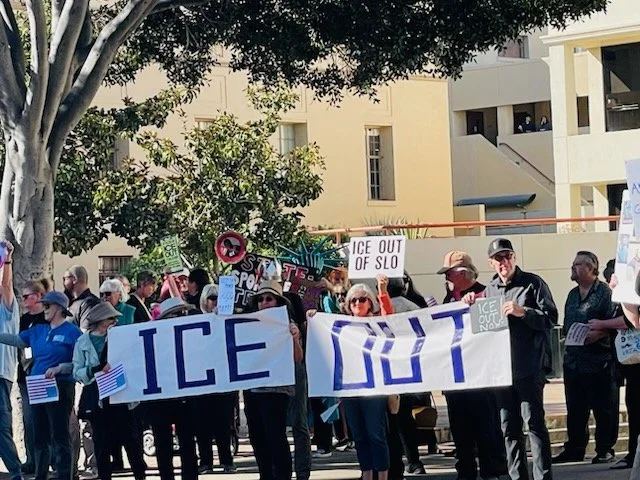
That tension was at full boil on Jan. 17, when hundreds of county residents descended on a Board of Supervisors hearing to request our elected officials declare ICE-free zones on county-owned property, and to demand that Sheriff Ian Parkinson stop cooperating with ICE officials.

Parkinson, under fire for allegedly violating state laws prohibiting cooperation between local law enforcement and ICE, attempted to tamp down the criticism at a public forum required by state law to disclose his department’s interactions with federal immigration officials during 2024 and 2025.

During the TRUTH Act (Transparent Review of Unjust Transfers and Holds) forum, emotions in the board chambers were palpable as the majority of public speakers demanded supervisors “do something” in response to ICE outrages.

Protesters gathered on the street outside the county building where the forum occurred as crowds packed the board chambers inside, filling overflow rooms and spilling into the lobby. Inside and out, people wore anti-ICE T-shirts and carried protest signs. A relatively few others at the forum donned MAGA hats or displayed signs to support the sheriff. 

Parkinson opened the forum with a formal report on his office’s involvement with ICE. He outlined Senate Bill 54 (SB54) and its implications for local law enforcement. He repeatedly asserted that his office does not enforce federal immigration law and that all inmates in custody are treated equally. 

Parkinson also explained that while fingerprints taken during booking are automatically uploaded to databases accessible to federal authorities, any subsequent ICE detainer requests are evaluated strictly under SB54. Only those convicted of serious or violent felonies, or certain “wobbler” offenses, are eligible to be transferred to ICE custody, he said, stressing that detainer requests without due process, such as those asking the jail to hold someone past their release time, are not honored. 

Yet the numbers presented by Parkinson complicated this narrative. In 2025 alone, 69 individuals were turned over to ICE, and ICE made at least 11 interview requests at the jail. This is in stark contrast to 2024, where only one inmate was turned over to ICE. While the sheriff emphasized that these individuals were exempt from SB54 protections, the scale and regularity of these transfers raised concerns about why collaboration with ICE increased so dramatically. 

In 2024, Parkinson claimed, it made “zero sense” to turn inmates over to ICE given the “open borders” policy of the Biden at the time, in that released inmates would simply “turn around and come right back in.” 

The term "open borders" is frequently used by MAGA critics to describe the high volume of migrant encounters in 2024. In fact, a major bipartisan border security bill was proposed in the Senate in early 2024 to increase funding for Border Patrol and further restrict asylum, but it was blocked by Republicans at the behest of candidate Trump. Parkinson did not mention this.

By contrast, Parkinson described 2025 as a year of “secured” borders, which, in his view, justified renewed compliance with ICE detainer requests. His explanation suggested that his willingness to cooperate with ICE is contingent not on state law, which remained unchanged, but on his confidence in Trump’s deportation regime. In effect, this rationale signaled Parkinson’s approval of ICE’s increasingly aggressive enforcement strategies. 

Perhaps the most anticipated moment of the forum came during discussion of a December 2025 incident at the jail involving protesters and ICE agents. Parkinson acknowledged that after the incident, he contacted ICE directly and later shared a video produced by ICE to explain what happened, arguing that it was the best available evidence because jail security cameras lacked audio. 

To many SLO residents, this appeared to contradict Parkinson’s repeated claims of non-collaboration with ICE. Even if the intent was informational, many argued, relying on ICE-produced media to shape public understanding carries a stamp of approval, adding that it was hard to imagine the sheriff would have used this video if he disapproved of ICE’s immigration enforcement. 

When it came time for public comment, the majority of residents who addressed the board expressed frustration with both the content of the sheriff’s presentation and ICE involvement in SLO. 

Several residents implored the board to follow the lead of other California counties, including Alameda, Santa Clara, and Los Angeles that have established ICE-free zones on county-owned property and significantly restricted the transfer of inmates to ICE.

Conversely, one speaker admonished the board to back the blue: “I am so disappointed in this county. We need to support our law enforcement. Why was our sheriff on trial here today?” 

Overwhelmingly, however, community speakers expressed not only disapproval of ICE but also a lack of trust in local law enforcement to protect the immigrant community. 

That trust is precisely what the TRUTH Act was designed to protect. Ideally, such forums would shed light on the true intentions behind local officials’ cooperation with federal-immigration enforcement. By focusing narrowly on technical compliance with SB54, however, Parkinson avoided engaging with the broader ethical and practical implications of ICE’s ongoing presence in SLO. 

Parkinson’s opinions on the increasingly violent ICE agency remain murky at best, with his restrained presentation signaling support of Trump’s immigration policies. ICE may be restricted in the jail by SB54, but frequent pickups, interviews, and visible coordination send a chilling message to immigrant communities. 

In the final analysis, the forum fulfilled the requirements of the TRUTH Act but fell short of its intended purpose. While the sheriff maintained that his office adheres to state law in managing the fate of inmates, his discretionary cooperation and reliance on ICE narratives suggests a more complex relationship than he was willing to acknowledge. 

For community members seeking reassurance rather than legal technicalities, the forum raised more questions than it answered.

Stella Barnes is an intern with the San Luis Obispo County Democratic Party studying Political Science at Cal Poly. She is passionate about politics and social justice.

  • As the local Democratic Party, the SLOCDP stands for the overarching tenets of Dignity, Stewardship, Integrity, and the active pursuit of Social, Economic, and Environmental Justice for all, by engaging the community through participation in the democratic process.

    • Length & Hours: ~10 weeks, 100–120 hours (10–12 hrs/week) to align with Cal Poly Journalism (JOUR 444) and Political Science (POLS 386/POLS 586) requirements.

    • Eligibility: Those in or past their third year receive preference; applications will be reviewed for prior experience and demonstrated commitment to civic engagement.

    • The program will maintain a 1:3 coordinator-to-intern ratio, ensuring close guidance.

    • Mentorship: Each intern will be paired with an Executive Board member for guidance, with opportunities for shadowing alongside elected officials and party leaders.

    • Civics seminar (local government process, civic engagement, and voter registration basics)

    • De-escalation training (practical skills for political fieldwork and community outreach)

    • Weekly 3-hour HQ shift (operations, volunteer engagement, community outreach)

    • Attendance at local government meetings with reporting and public comment opportunities

    • One-on-one engagement with elected officials and candidates

    • Direct mentorship from SLOCDP Executive Board members

    • Monthly attendance at the SLO County Central Committee meetings

    • Attendance at local Democratic Party club meetings

    • Journalism Interns

      • Support press releases, op-eds, and traditional media engagement.

      • Create social media content (short-form videos, interviews, graphics).

      • Collaborate with the SLOCDP Communications Team to expand media outreach.

      Political Science Interns

      • Gain campaign field experience (canvassing, phone/text banking, postcarding, lit drops; max 1/3 of total time per POLS guidelines).

      • Research and report on policy issues at the local and state levels.

      • Liaise with elected officials, candidates, and community organizations.

    • Ongoing supervision and support

    • Bi-monthly coaching sessions

    • Regular feedback and expected outcomes

    • Opportunities and activities that build on the interns’ interests and skills

    • Career connections, mentorship, and networking opportunities within the organization/industry

    • Recommendation Letters

    • Complete tasks assigned.

    • Report difficulties with task completion at bi-weekly Zoom intern check in or weekly email check in.

    • If a task was time sensitive and not completed, another task must be completed with Supervisor’s direction and guidance.

    • Attendance at one SLOCDP monthly meetings.

    • Attendance at local democratic club monthly meetings.

    • Attendance at school’s democratic club meetings.

    • Attendance and participation in a local government meeting, (School Board, City Council, Board of Supervisors meeting). Public comment must be made at the meeting or a publish-ready summary prepared.

    • Responsibility for completion of the intern timesheet that will be shared with supervisors prior to Finals.

    • All products created as an intern belong to the SLOCDP.

  • This program is structured for academic credit internships through Cal Poly’s Journalism and Political Science Departments. Students must enroll in JOUR 444 or POLS 386/586 to earn course credit, with SLOCDP serving as the internship provider. Additionally, non-credit volunteer roles are available year-round through our Headquarters Team, offering flexible engagement opportunities for students not pursuing credit.